
- hello@prenerosolutions.com
- Sargodha Road, Faisalabad, Punjab, Pakistan 38000.

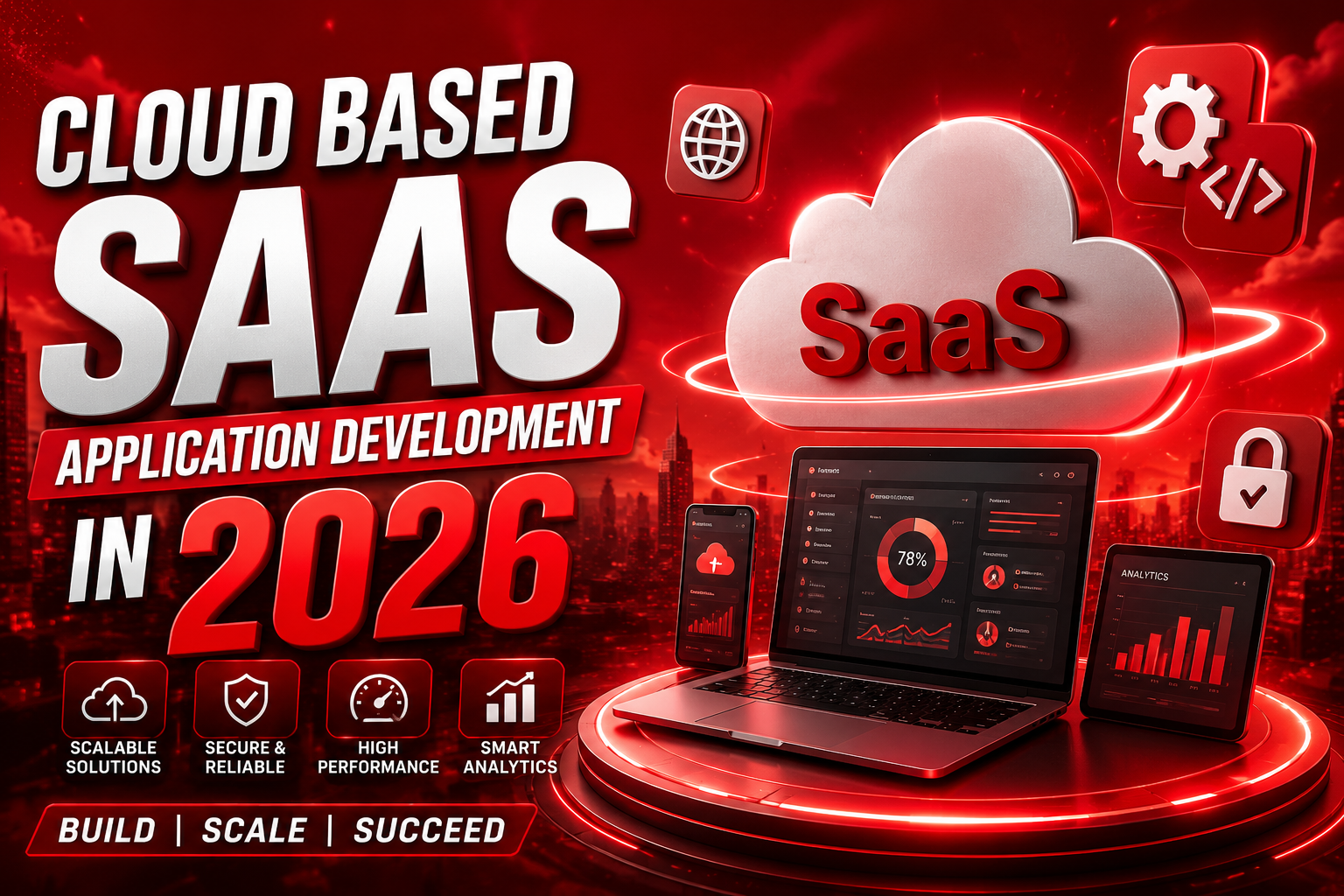
Cloud Based SaaS Application Development in 2026

20
Jul
Cloud Based SaaS Application Development in 2026
● Companies don’t need programs with complex setup procedures nor costly equipment and regular maintenance either anymore. They spend money on developing saas applications for clouds instead of traditional software where you have to buy and install it yourself. Starting companies with new products are going for a startup approach while big corporations have many customers and need an efficient platform that is flexible as well secure at no cost.
● Cloud based saas app designing has increased, which changes business model of creating/developing applications today. Companies concentrate more towards scalable products/services; flexible work-from-home options for employees; as well as flexibility of service delivery with minimal changes needed from their facilities infrastructure. Whether you are launching a subscription-based app or updating your current product, understanding how cloud technology works is the first step to creating software that stays competitive in 2026.
● How companies are moving towards cloud computing.
● It’s not just big companies that are undergoing digitalization today. Smes, health care firms, schools as well as banking institutions & retailers have been moving online. It is also a trend follower’s decision with real-world benefits for your company, including increased efficiency as well as better client experience scores.
● Modern SaaS applications solve most of these problems. Rather than providing programs as installers and discs; firms offer their product on-line where customers can log-on anywhere with a computer that is connected to an internet network.
● Among other things, some key factors that companies select for their use are ….
● Reduce infrastructural expenses & upkeep costs.
● Automatic software updates
● Easy access from anywhere
● Better collaboration between remote teams
● Enhanced data protection and backup
● More rapid implementation of updates.
● Improved business continuity
● This is because these advantages justify continued investment by start-ups as well as existing companies on cloud applications rather than conventional programs/products/services.
● From conventional programs towards contemporary applications.
● A number of years back, organizations bought programs and had them installed individually at their own machines as well as remote server systems. Each improvement required technology assistance; enlarging a program often involved acquiring more machines.
● The present-day information age has changed drastically today.
● Current companies depend upon subscriptions services which are constantly updated automatically by them. Customers get updates with no need for updating their programs whereas businesses are able to offer bug fixes as well as speed-ups behind-the-scenes only.
● It is encouraging companies too for adopting saas app designing which provides more agility towards responding with customers’ requirements at a fast pace.
● A Practical Example
● Consider an epm company with 500 clients for your startup’s 1st year. As its reputation grows, the customer base increases to 25,000 users in two years.
● Using existing programs would be costly to maintain with long support periods as well as major infrastructural changes needed for expansion purposes.
● Cloud based services allow for extra computing power that is provisioned on demand so your site doesn’t have any problems when there’s a lot of activity going around it. It also provides an improved customer experience, as well as less work on our part through increased flexibility of operation.
● Why 2026 is a significant year.
● Technological development has been rapid recently. AI, automatization, prediction analysis & sophisticated defense is now a must-have not an option anymore.
● Companies need programs today.
● Support millions at once.
● Protect sensitive customer information
● Link to other sites.
● Deliver real-time analytics
● Adhere to both smartphones as well as pc’s.
● Scale without performance issues
● The pressure has contributed to saas product creation being among current fastest growing sectors within tech world.
● Companies investing now at cloud services are better positioned than those who are sticking with old technology and will have a hard time meeting their clients’ needs soon enough.
● What You'll Learn in This Guide
● Creating an effective software as a service (SaaS) application needs far beyond coding skills. At every phase, from conception through design as well as infrastructure management till implementation is vital for sustainable growth.
● Here is what will be explained to you next.
● Key elements of effective ssa’s systems.
● Popular technologies developers use in 2026.
● Typical errors that companies must prevent.
● Effective techniques of developing flexible systems.
● Important aspects of safety prior to deployment.
● Practical startup & business lessons learned from real life experiences.
● Knowing them would assist with making good choices minimizing risk of bugs during coding as well providing a product which is useful for customers forever.
● Developing an effective saas software application.
● Developing an effective software as a service (SaaS) application isn’t just coding properly. First of all, understand what is your goal for solving as well as who are those that will be served by it. Companies which invest some effort to test out a concept prior implementation can save several thousand dollars on extra functionality they don’t need.
● One of them would be starting out with an MVP. Do rather develop all features then release an app which is excellent at solving just 1 big issue. From then on customer reviews are a guide to what will be improved going forward at this site.
● Cloud based saas app development plan is about growth, not release of products at once.
●
Planning Before Development
start by doing a good plan ahead of time. Pushing things out too soon causes late deliveries, cost problems as well as useless functions that users don’t need.
Before development starts, define:
● Your target audience
● Core business goals
● Revenue model
● Essential features
● User roles and permissions
● Security requirements
● Growth expectations
● Preparation is helpful for programmers to take smart design choices, avoiding costly redesigns afterwards.
● Know Your Users
● In fact, crms that cater to freelance workers are quite unique compared with those of healthcare providers as well as factories.
● Knowing how users struggle every day helps programmers develop easy-to-use processes rather than complicated ones for them.
● Selecting an appropriate tech stack.
● Choice of technology impacts efficiency, upkeep as well as expansion potential.
● Popular frontend technologies include
● React
● Angular
● Vue.js
● Next.js
For backend development, companies commonly use:
● Node.js
● Laravel
● .NET
● Django
● Spring Boot
Databases often include:
● PostgreSQL
● MySQL
● MongoDB
● Microsoft Azure
● Google Cloud Platform
It is all about your needs as a company with respect of scale; number visitors you want to attract for sale later etc.; not what’s trending right now.
Current customized programming services generally focus on products that have a robust fanbase as well are likely to be reliable for many years ahead of them.
Designing for Growth
A lot of startup companies develop products that are useful now, rather than later on.
This strategy is costly when you start getting more visitors.
Rather than that, programmers must develop flexible cloud based products for expansion and no need rebuild everything altogether.
Scalability includes:
● Load balancing
● Distributed databases
● Automatic resource scaling
● Cloud storage optimization
● Performance monitoring
Imagine an online learning platform gaining thousands of students after a successful marketing campaign.
If the infrastructure cannot scale automatically, users experience slow loading times, failed payments, and interrupted video streaming.
Planning for growth from the beginning prevents these issues.
Creating a Flexible Architecture
● Cloud computing has been very successful because of its capability for separating out various products as individual modules/services/programs/products.
● A lot of today’s app developers use multitenancy so that several clients can access a particular software product without interfering with each other’s information being safe and private.
● It has many benefits.
● Lower hosting costs
● Easier maintenance
● Faster software updates
● Better resource utilization
● Simplified customer management
For businesses offering subscription-based software, this architecture creates an efficient balance between performance and operational costs.
Why Cloud-Native Design Matters
Traditional applications were designed for fixed servers.
Software today has a distinct design philosophy.
Cloud native apps have been developed with a focus on being able to be recovered easily after failure; scale up when needed during peak times as well.
Some important characteristics include:
● Containerized deployment
● Automated scaling
● Continuous monitoring
● High availability
● Faster updates
These features allow development teams to release improvements without disrupting users.
Security Should Never Be an Afterthought
● Clients rely on companies for important data.
● No matter whether its billing informations, private customer particulars & sensitive business documents; safeguarding of privacy must be at heart during programme implementation.
● Important security practices include
● End-to-end encryption
● Secure authentication
● Multi-factor authentication
● Regular security testing
● Automated backups
● Role-based access control
● Continuous monitoring
● Cloud companies that invest on these products usually get good protections through big players like google, amazon etc.; however you should also ensure your apps are safe enough for users’ use.
● Integrations Improve Customer Experience
● There are very little companies that use one program for everything they need to do.
● Clients want software that integrates their existing programs and products.
● Popular integrations include
● Payment gateways
● CRM platforms
● Email marketing software
● Accounting systems
Communication tools
Analytics platforms
Customer support software
Properly designed integration simplifies tasks, increases efficiency of customers’ usage significantly.
SaaS application creation is now more focused around api support as companies are becoming increasingly dependent upon several online applications that work simultaneously with each other nowadays.
Quality directly affects customer loyalty.
A strong software program may also drop clients due to being sluggish.
Studies have shown repeatedly, people drop out of a program if its loading time is long enough for them not want it anyway.
team development increases productivity through ….
Optimizing database queries
Reducing unnecessary API requests
Compressing images
Implementing caching
Using Content Delivery Networks (CDNs).
Monitoring application performance continuously
Quick programs increase client’s delight as well enhance their internet footprint, which is a significant part of corporate image building.
Some of these are common errors that may slow your progress significantly:.
Creating an ssa service app seems appealing; however most companies commit preventable errors which result to expense increases as well delays of expansion opportunities. Taking care of them at an earlier stage saves you a lot from wasted effort as well as costs.
Ignoring User Feedback
Certain firms invest several years developing things that seem like what people need, but aren’t tested first. After launch of a item people require something totally new.
Feedback should be collected constantly, then we can improve our site according what customers are saying about us.
Choosing Features Over Simplicity
Including all features is tempting, however, it usually renders a program hard-to-use.
A good platform generally addresses a particular issue most effectively prior to expanding on other features thereof.
Forgetting About Security
It must always have been a security issue during design rather than an afterthought at runtime. Periodic penetration tests; data encryption methods as well as safe login procedures are good for your company & clients alike.
Poor Performance Optimization
The most powerful software program is likely to fail when there are slow loading times, crashes while handling peak loads of visitors. Test performance is a must for each version update.
Future Trends Shaping SaaS in 2026.
The technology is evolving constantly; companies who are agile enough for this change have an edge over others now.
Artificial Intelligence Integration
Artificial intelligence (AI) has become an integral part of current products and services. Companies use smart automations to provide better service delivery through prediction analysis tools as well recommendation systems alongwith process management solutions.
No code tools low-code software.
Businesses tend towards integrating existing software tools along side cloud-based applications for faster process management within organizations as well reducing coding durations considerably.
Stronger Data Privacy
People have become increasingly conscious about what data they’re keeping, as well as where it’s being held up for access purposes. Companies with a focus on openness as well adherence would be able to gain more consumers’ faiths.
Smarter Automation
Tasks like payments processing, reports generation, email alerts & client introduction have been completely automatable so that our team can concentrate more effectively at strategy development rather than routine operations.
With time passing by, cloud based saas app development is likely still a key part for all sectors during their digitization journey ahead.
Tips for Building a Successful SaaS Product
No matter if its a startup venture and/or scaling up current business model then these tips will help to increase odds for success.
Test out of an innovative venture prior to substantial investment.
Develop a minimum viable product (mvp) then iterate on that with user input feedbacks.
Maintain a neat, easy-to-use ux/ui design.
Start with safety first.
Monitor application performance regularly.
Design out of structure ahead-of-time.
Prefer to test products at each launch date.
Constantly study customers’ actions for bettering a service/product/service.
Effective business software as a service (SaaS) products come from iterative enhancements instead of being developed once and then kept that way.
Final Thoughts
Businesses require programs capable of expanding with clients’ needs; they should be flexible enough for shifts as per customer requirements; also dependable even when workload increases significantly. This explains precisely how a startup can be an excellent investment while also being beneficial to any organization, regardless if it’s new-age-old.
An effective software as a service (SaaS) application is not just about good looks, nor sophisticated technologies either. Success is long term by knowing your customers’ requirements; scaling up successfully; ensuring high level of safety as well providing constant improvements through actual usage experiences.
No matter if its an e-commerce software solution provider, health care technology company & education website developer; crms provider as well finance app maker then invest on current trends of tech industry now.
The companies leading the digital economy are not necessarily the ones with the biggest budgets—they are the ones that deliver consistent value, listen to their users, and evolve with changing technology. By following the strategies outlined in this guide, you'll be in a stronger position to build software that remains competitive well beyond 2026.
Frequently Asked Questions
What is cloud based SaaS application development?
It is the process of creating subscription-based software that runs on cloud infrastructure, allowing users to access the application through the internet without installing it on their devices.
Why are cloud-based SaaS applications popular?
They reduce infrastructure costs, offer automatic updates, improve accessibility, and make it easier for businesses to scale as their customer base grows.
How long does it take to develop a SaaS application?
Development timelines vary depending on project complexity. A basic MVP may take three to six months, while enterprise-level platforms often require nine to twelve months or more.
Which industries benefit the most from SaaS?
Healthcare, education, finance, retail, logistics, real estate, marketing, and manufacturing all benefit from cloud-based software solutions.
Is cloud-based SaaS secure?
Yes. When built correctly with encryption, secure authentication, regular updates, and industry best practices, cloud-based SaaS applications provide a high level of security
0 Comments
No comments yet.
Leave a Comment